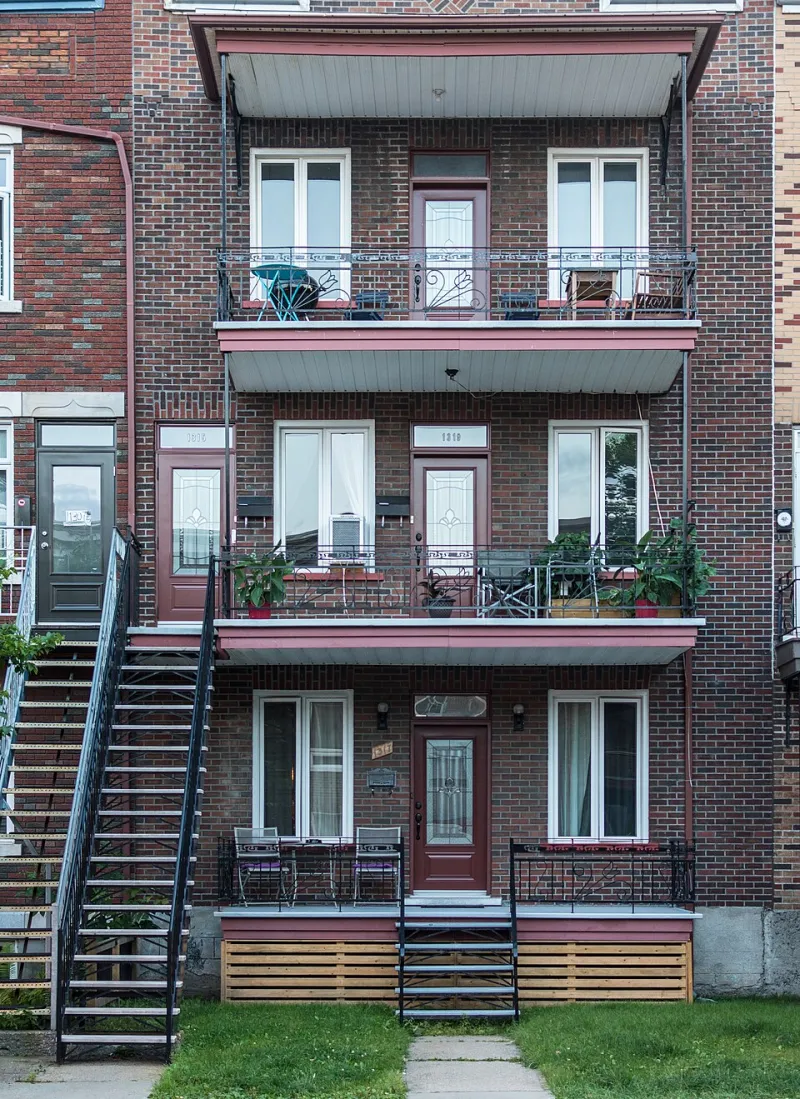
Two Weeks in Patagonia, Paid for by Unit B: The Travel-Funded Triplex Plan
Photo: Shocksingularity, CC0, via Wikimedia Commons
Every triplex owner eventually confronts the same quiet question: now that the building pays for itself, what is the income actually for? For a growing cohort of owner-occupants, the answer is a plane ticket.
The math is more forgiving than most investors assume. A well-purchased triplex — one where the owner lives in a unit and rents the other two — often covers the full mortgage payment with rent to spare. That surplus, redirected deliberately, can become an annual travel budget without touching a paycheck.
The Exchange Rate Between Rent and Runways
Start with a simple conversion exercise. Take your monthly net cash flow after the mortgage, taxes, insurance, and a maintenance reserve. Suppose Units A and C generate $3,400 combined, and your total carrying cost is $3,000. That leaves $400 per month, or $4,800 per year, before you spend a dollar of your own salary.
Now price the trip. A three-week itinerary through northern Argentina — Salta, Mendoza, a few days in Buenos Aires — might run $4,500 to $6,000 for a couple flying from a US hub. At current numbers, roughly thirteen to fifteen months of surplus rent funds one year of travel. Tighten the trip or raise rents, and the exchange rate improves fast.
A useful benchmark: one rented month per travel week. If your two rental units clear $800 above expenses monthly, every four months of tenancy buys roughly one week away. Frame it that way and the motivation to keep units occupied becomes personal.
Two Case Studies in Funded Wanderlust
Consider a Denver nurse who bought a 1960s triplex near Lakewood with an FHA loan at 3.5% down. Her two tenants covered the entire $2,650 payment. Rather than pocketing future appreciation, she and her partner set a rule: every January, one month of rent becomes a travel fund. Five years in, they've logged a month in Portugal, a Patagonia trek, and two road trips through the national parks — all on rent they would otherwise have let drift into a checking account.
A second example comes from a Rochester, New York owner who took a different route. He house-hacked for three years, then moved out and rented his own unit. With all three doors producing income, his annual surplus jumped to roughly $9,000. He now takes the entire month of February off, working remotely from Medellín while a property manager handles the building. His mortgage is paid by strangers; his February is paid for by them too.
Short-Term or Long-Term Tenants?
Travel-focused owners face a structural choice, and it matters more than most guides admit.
Long-term tenants offer predictability — the lifeblood of trip planning. A twelve-month lease means you know exactly what your travel budget looks like in November. The trade-off is rate lag; rents reset only annually.
Short-term rentals can produce 20 to 40% more gross revenue in tourist-adjacent markets, but they demand either your own labor or a 20% management fee, and they inject calendar risk into precisely the thing you're optimizing: your freedom to leave. They also invite regulatory scrutiny — many US cities, from New York to San Diego, have tightened short-term rental rules considerably.
A hybrid works for some: two long-term tenants anchoring the mortgage, with the owner-occupied unit listed on short-term platforms only during the weeks the owner travels. You leave, guests arrive, and the trip partially pays for itself.
The Step-by-Step Framework
- Audit your true surplus. Net operating income minus debt service, minus a 10% maintenance and vacancy reserve. Be honest with the reserve.
- Price the trip in rented months. Divide trip cost by monthly surplus. Write the number down; it becomes your occupancy motivation.
- Automate the separation. Open a dedicated high-yield savings account and auto-transfer the surplus monthly. Travel money that sits in checking gets spent on patio furniture.
- Choose your tenancy model based on how much hands-on time you can spare — and how much of it you'd rather spend abroad.
- Book against the fund, not the hope. Only commit to flights when the account balance covers them.
The Long View
There's a satisfying symmetry here. The triplex is itself a form of geographic leverage — a building that lets you live cheaply while equity accumulates elsewhere. Directing some of that accumulation toward experiences is not financial indiscipline; it's the point of the machine.
The house-hacked vacation won't make you rich on paper. But ask the Denver nurse whether she'd trade her Patagonia photos for an extra point of cash-on-cash return, and the answer is already on the wall.