Sidewalk Signals: A Buenos Aires-Born Scorecard for Judging Any Triplex Location
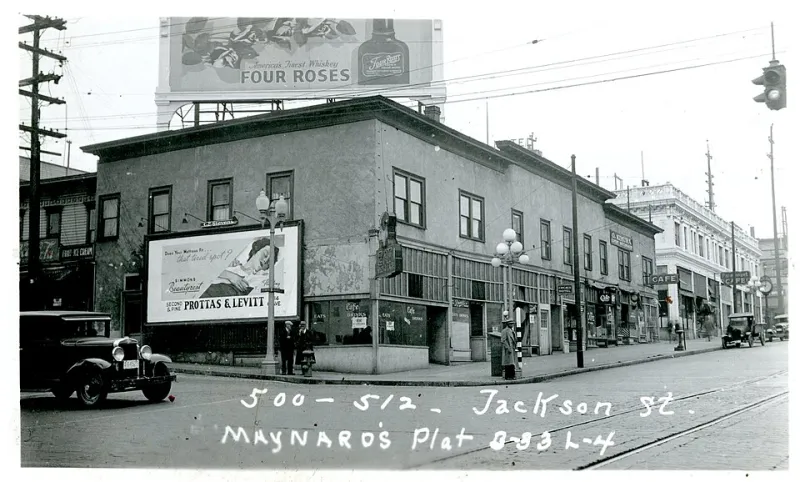
Photo: Rob Ketcherside, CC BY 2.0, via Wikimedia Commons
The Question a Spreadsheet Can't Answer
Every American investor has a data stack: crime heat maps, school ratings, median income by census tract, days-on-market trends. All useful. None of it tells you whether the woman on the corner selling empanadas has steady customers at 6 p.m. on a Tuesday.
In Buenos Aires, where triplex and multi-unit living has been the norm for generations rather than a trend, real estate people ask a deceptively simple question before they ask about price: ¿Cómo se vive la cuadra? — how is the block lived? The answer, read from the sidewalk, often predicts tenant demand more reliably than any downloadable dataset.
This article adapts that instinct into a repeatable framework for US mid-size markets — places like Columbus, Albuquerque, Grand Rapids, or Richmond — where triplexes trade at prices single-family investors can actually reach, and where block-level variation is enormous.
Why Street-Level Signals Beat Aggregate Data
Aggregate data describes a neighborhood. Sidewalk observation describes a block — and tenants don't rent neighborhoods, they rent blocks.
A triplex can sit four hundred yards from a thriving commercial strip and still suffer vacancy because the intervening block is a fast, four-lane arterial with no shade, no benches, and no reason to linger. Conversely, a modest building facing a quiet street with a corner café, a bus stop at the curb, and a hardware store within a five-minute walk will hold tenants for years.
Walkable urbanism researchers call this the difference between macro and micro location. Argentine cities, built around the cuadra — the walkable block — never forgot it. American mid-size markets, especially those that upzoned recently, are rediscovering it. Investors who can read it early buy ahead of the rent curve.
The Three Signals That Matter
1. Corner Commerce
In Buenos Aires, the esquina — the corner — is where commerce concentrates: the kiosco, the café, the bakery. A busy, well-kept corner business within one block of a candidate property is a strong indicator of daily foot traffic. The test isn't whether the business is upscale; it's whether people visit it routinely. A corner laundromat with a steady stream of customers beats a vacant boutique any day.
In US terms, look for corner bodegas, coffee shops, pharmacies, or barbershops with mid-week activity. Note whether the business is open at 10 a.m. and 6 p.m. on a weekday — the hours when your future tenants will be leaving and returning.
2. Transit Frequency
Not transit existence — frequency. A bus line that runs every twelve minutes changes a tenant's life; a line that runs every forty minutes is a decoration. Check the actual headways on the transit agency's site, and stand at the stop for fifteen minutes. Count buses. Note whether the shelter is used, littered, or empty.
A triplex within a three-minute walk of high-frequency transit can command a rent premium of 5–10% in most mid-size US markets, and — more importantly — fills faster after turnover.
3. Sidewalk Energy
This is the hardest to quantify and the most revealing. Walk the block at three times: morning commute, late afternoon, and after 8 p.m. Ask:
- Are there people on foot who are not waiting for anything?
- Are ground-floor windows and storefronts lit and maintained?
- Do pedestrians and drivers acknowledge each other, or does everyone move defensively?
- Is there seating — even informal seating — where people choose to sit?
Neighborhoods with what Argentines call movida — street life — retain tenants longer because residents form attachments to their daily routines, not just their units.
The 10-Point Scorecard
Print this and bring it to your next property visit. Score each item 0 or 1; a block scoring 7 or above is a strong micro-location.
| # | Signal | Score |
|---|---|---|
| 1 | Active corner business within one block, open mid-week | __ |
| 2 | Grocery or food option within a 10-minute walk | __ |
| 3 | Transit stop within a 3-minute walk | __ |
| 4 | Transit headway of 15 minutes or better during peak hours | __ |
| 5 | Sidewalks continuous and in walkable repair on the block | __ |
| 6 | Street trees or shade along the primary walking route | __ |
| 7 | Pedestrians present at 6 p.m. on a weekday | __ |
| 8 | Ground-floor storefronts vacant on fewer than 1 in 4 parcels nearby | __ |
| 9 | Visible evening activity (lit windows, open business) after 8 p.m. | __ |
| 10 | Residents who make eye contact or greet you while you walk | __ |
Interpreting the score:
- 8–10: Micro-location is an asset. Underwrite modest rent growth and fast lease-up.
- 5–7: Workable. Price in slightly longer vacancy and verify the weak signals are fixable (e.g., a new bus line, a signed commercial lease).
- 0–4: You are buying the building, not the block. Demand a corresponding discount, and expect turnover to be your permanent tax.
A Caveat for the Skeptics
Street observation is subjective, and subjectivity invites bias. Guard against it by visiting at the three scheduled times regardless of your first impression, and by scoring the block before you tour the interior. A beautiful triplex will inflate your read of the sidewalk; score the sidewalk first, cold.
The Long Game
Micro-location signals also lead macro trends. Blocks that score well today — walkable, transit-served, commercially alive — are precisely the blocks that appreciate fastest when mid-size US markets continue densifying. Argentine neighborhoods never lost this quality because they never built it out; American investors have the rare chance to buy into it as it returns.
Three doors, one building — but the fourth variable is the sidewalk out front. Score it like you mean it.