Meter by Meter: Why the Utility Setup Should Decide Your Next Triplex Offer
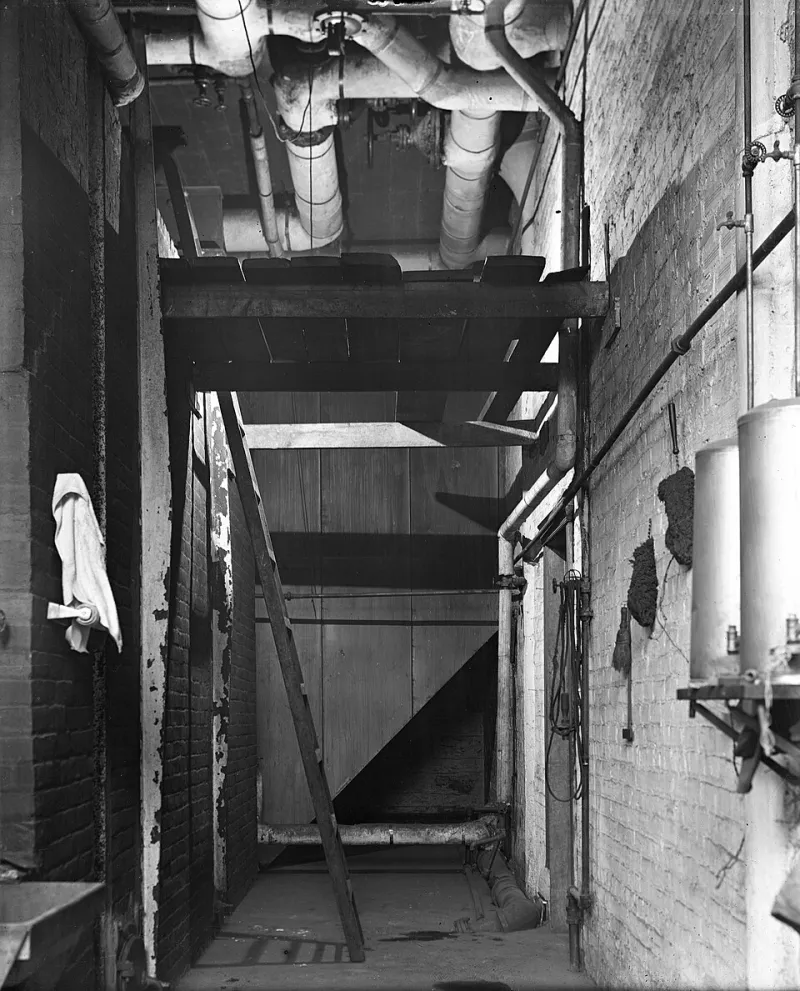
Photo: , Public domain, via Wikimedia Commons
Every triplex investor eventually learns the same lesson: the building you buy is not the building you toured. The one you actually own is revealed in the utility bills, and by the time those arrive, the earnest money is long gone.
After a decade of tracking heating, electric, and water costs across a handful of small multi-family properties, the pattern is impossible to ignore. Buildings with similar rents, similar ages, and similar locations can produce annual utility bills that differ by $6,000 or more. Almost none of that variance is luck. It is architecture — specifically, the architecture of meters, boilers, and pipes.
The Single Meter Problem
The most expensive configuration in small multi-family housing is also one of the most common: a single master meter with the owner paying everything. In these buildings, tenants have no financial incentive to conserve. A unit kept at 76 degrees in January costs the same occupant nothing extra, and the landlord absorbs the difference.
One three-unit building tracked over five years averaged $9,100 annually in combined gas and electric under a master meter. A comparable building of the same vintage, with the units separately metered for electric and gas, averaged $4,300 in owner-paid common-area costs. Same block, same weather, same era of construction. The gap is behavioral, and it is permanent.
The fix — splitting meters after acquisition — is possible but rarely cheap. Local utility companies often require separate service drops, panel upgrades, and sometimes new gas lines, and the total frequently runs five figures per building. Buyers who skip this diligence are quietly financing that retrofit into their purchase price.
What Water Reveals About the Building
Water is the utility investors forget, and it is the one that hides the most. In most US markets, water and sewer are billed to the property, not the occupant, which means even a fully electric building with separate gas meters can still carry an owner-paid water bill that scales with tenant behavior rather than with the landlord's decisions.
A three-unit building with older 3.5-gallon-per-minute fixtures and no submeters can easily run $2,400 to $3,600 a year in water and sewer charges. Low-flow retrofits and submetering — where legal — can cut that meaningfully. The showing checklist item is simple: ask to see the most recent water bill, and ask whether units are submetered. A seller who hesitates on that question has already answered it.
Reading the Basement in Fifteen Minutes
You do not need an engineer's license to spot an expensive mechanical layout. During a showing, three observations carry most of the information:
Count the meters. Walk the exterior and the basement. Three electric meters, three gas meters, and a water meter with submeters is the gold standard. One of each is a red flag that the seller has been subsidizing tenant consumption — and that your pro forma will too.
Find the boiler and check its date. A cast-iron boiler with a decade sticker or serial date is fine. A unit installed before 2000 serving all three units from a single zone is a capital expense with a countdown clock, typically $8,000 to $15,000 installed. Price it into your offer or walk.
Look for the distribution layout. Single-pipe steam systems and shared hydronic loops cannot be easily zoned per unit. Forced-air systems with separate furnaces can. The more the heating system is shared, the more the operating costs are shared — which means the less control you have over them.
Building the Number Into Your Offer
The disciplined approach is to request two full years of utility bills during due diligence, then normalize them. Divide annual costs by twelve, compare against per-unit averages for the region, and adjust for anything unusual — a vacant unit, a landlord-paid laundry room, an unusually cold billing cycle.
Then apply the master-meter discount. If the building bills tenants nothing for heat, underwrite those costs as yours, add 10 to 15 percent for conservation losses you cannot see, and let that number move your price rather than your optimism. A building with a $9,000 utility burden is not the same asset as the separately metered building across the street, no matter how similar the brickwork looks.
Small multi-family investing rewards buyers who notice what others overlook. Cosmetic kitchens get noticed. Boiler rooms get ignored — until they show up, month after month, on the operating statement. Walk the basement first. The building will tell you what it costs to own it, and the seller's asking price has not yet accounted for what you now know.