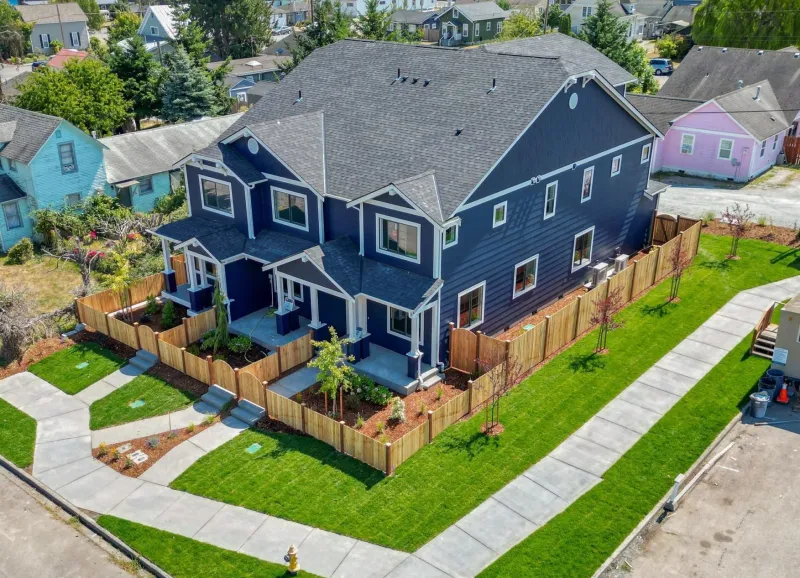
Shared Doors, Shared Equity: Multigenerational Ownership Lessons From South America's Triplex Tradition
American real estate culture celebrates independence: the single buyer, the single-family home, the solo mortgage application. Argentina's housing market operates on nearly the opposite premise. There, it is common for siblings, parents, and cousins to co-purchase a multi-unit property—often a triplex-style building where each household occupies its own floor—because decades of inflation and credit scarcity made solo homeownership nearly impossible for most families.
The comparison matters for US investors in 2024 and beyond. With median home prices straining affordability in markets from Boston to Boise, the Argentine model of shared equity deserves a closer look. Not as nostalgia, but as a practical blueprint.
Why Argentina Built Its Housing Culture Around Co-Investment
Argentina's economic history—recurring currency devaluations, limited 30-year fixed mortgage availability, and chronic rental market regulation—pushed families toward collective ownership. A building with three units allowed one family member to secure housing, another to generate rental income, and a third to build equity, all under a single acquisition that no individual could have financed alone.
The structure also solved a social problem. Multigenerational living, often stigmatized in the US, became normalized when each generation had a private unit in the same building. Privacy was preserved; capital was not duplicated.
The US Translation: The Family Triplex Syndicate
American buyers can adapt this model without formal syndication paperwork. Consider a common scenario in a high-cost metro like Denver or San Diego, where a modest triplex may list at $850,000—far beyond a single first-time buyer's borrowing capacity.
A three-party family arrangement might look like this:
- Parent contributes the down payment (often via home equity or retirement savings) in exchange for a proportional ownership share.
- Adult child occupies one unit using an FHA loan, which permits 2-4 unit purchases with as little as 3.5% down when the buyer lives on-site.
- Sibling or relative rents another unit at market rate, stabilizing cash flow and qualifying income for the loan.
The owner-occupancy requirement is the hinge. US financing rewards the buyer who lives in the building with lower rates and down payment minimums—an advantage the Argentine model, lacking equivalent government-backed products, never enjoyed.
Structuring Shared Equity Without Family Friction
The Argentine tradition works because it is embedded in cultural expectation. American families importing the model need explicit documentation instead. Before closing, co-owners should establish:
- A tenancy-in-common or LLC agreement specifying ownership percentages, capital contribution schedules, and buyout mechanics.
- A written reserve policy covering roof, boiler, and vacancy risk—disagreements over maintenance funding are the leading cause of family co-ownership breakdowns.
- An exit provision with a defined valuation method, such as an agreed appraisal firm or a formula tied to net operating income.
An experienced real estate attorney in the property's state should draft these documents; a handshake modeled on family trust is not enforceable in a US courtroom.
Where the Model Shines—and Where It Doesn't
The approach performs best in high-cost markets where the barrier is the down payment, not the monthly carrying cost. It falters where family members have divergent financial goals: one heir may want liquidity while another wants long-term hold, and forced-sale clauses only soften that conflict, not resolve it.
There is also a tax dimension. Shared ownership splits depreciation deductions and complicates Section 121 exclusion eligibility (the $250,000 primary-residence exclusion), so a CPA should model the structure before—not after—the purchase.
The Takeaway for the American Triplex Buyer
Argentina's rent-to-own and family co-investment culture was born of necessity, but it contains a durable insight: multi-unit housing is the natural vehicle for pooling modest family capital into a productive asset. A triplex under one loan, with one unit occupied by the owner and the family's combined resources behind the down payment, can turn an unaffordable market into an accessible one.
The lesson is not to copy the culture wholesale, but to borrow its economics—then formalize them with American legal tools. Three doors, three stakeholders, one building: sometimes the oldest housing models are the most relevant to the newest affordability crisis.