Three Doors, One Loan: Mapping the Risk-Reward Curve for Your First Multi-Family Purchase
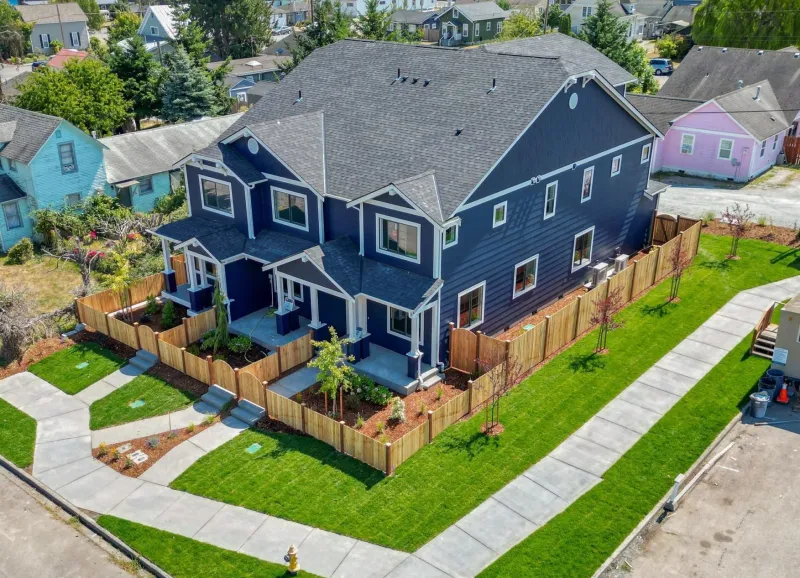
Photo: triplex apartment building exterior three units American neighborhood, via www.milbrandtarch.com
Every investor eventually confronts the same fork in the road: buy a single-family rental and accept modest returns, or leap into a five-unit-plus building and inherit commercial lending requirements, larger down payments, and steeper operational complexity. Between those poles sits an asset class that rarely gets the attention it deserves — the triplex.
Why Three Units Changes the Math
A single-family rental carries a binary risk profile: when the tenant leaves, the property generates zero income while expenses continue. A triplex distributes that risk across three income streams. If one unit turns over, the other two leases continue paying, typically covering a substantial share — often all — of the mortgage, taxes, and insurance.
The distinction matters most during downturns. vacancy risk on a duplex is 50% per unit; on a triplex it falls to roughly 33%. That diversification, achieved with a single roof and a single loan, is the quiet engine behind triplex returns.
The Financing Advantage Most Investors Overlook
Properties of one to four units qualify for residential mortgage treatment in the United States. That means Fannie Mae and Freddie Mac conventional loans, FHA financing with down payments as low as 3.5% (owner-occupied), and interest rates meaningfully below those attached to commercial paper.
Contrast this with a five-unit building: lenders typically require 20–25% down, underwrite the asset on its income statement rather than the borrower's W-2, and price the loan with a commercial spread. For a first-time investor, the triplex delivers apartment-building economics on a residential lending chassis.
Where Cap Rates Land — and Why Region Matters
Triplex capitalization rates vary widely by market:
- Midwest and Rust Belt metros (Cleveland, Detroit, Kansas City): 7–9% cap rates are achievable, though tenant quality screening and capital expenditure reserves demand extra diligence.
- Sunbelt growth markets (San Antonio, Tampa, Charlotte): 5.5–7%, supported by population inflows and rent growth.
- Coastal gateways (Boston, Los Angeles, Seattle): 4–5.5%, where appreciation and rent upside, not immediate yield, drive returns.
New investors should resist chasing headline cap rates. A 9% cap rate in a declining neighborhood can evaporate through vacancy and delinquency faster than a 5.5% cap rate in a supply-constrained market.
A Five-Step Underwriting Framework
1. Verify gross income, not the seller's pro forma. Request actual rent rolls and 12 months of bank deposits. Adjust to market rents using comparable listings on major rental platforms.
2. Underwrite a realistic vacancy allowance. Use 5–8% even in tight markets. Zero-vacancy assumptions are the fastest route to a bad deal.
3. Load operating expenses at 35–45% of gross income unless documented otherwise. This covers taxes, insurance, water, common-area utilities, maintenance, and management — whether you self-manage or not.
4. Stress-test the debt. Model the deal at today's rate plus 100 basis points. If cash flow survives, you have margin for refinancing risk.
5. Price the capital expenditures. Roofs, boilers, and electrical panels in older triplexes routinely run $10,000–$25,000 per item. A building inspection is non-negotiable.
The Bottom Line
A triplex is large enough to generate meaningful cash flow and small enough for a solo investor to understand every system, every tenant, and every dollar. For most first-time multi-family buyers, that balance — not any single metric — is the real sweet spot.