Buying Buenos Aires From a Barcalounger: The Remote Investor's Guide to Argentine Triplexes
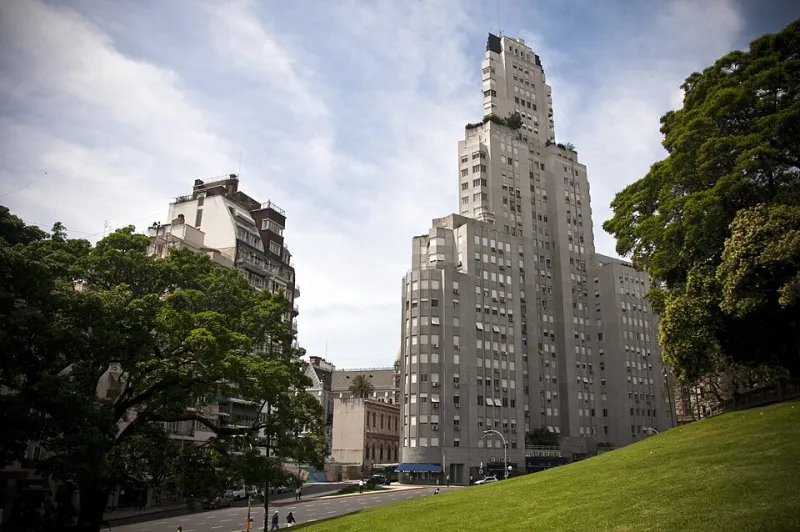
Photo: Jorge Royan, CC BY-SA 3.0, via Wikimedia Commons
Every few months, someone in a Cincinnati or Columbus investment group discovers the same spreadsheet: a three-unit building in Palermo or Almagro, listed at a price that would barely buy a parking spot in an American metro. The math looks almost insulting. Three doors, a rent roll in a city of fifteen million, and an entry price that seems to assume you stumbled onto a typo.
Then the second page of the spreadsheet appears — the one with currency controls, cross-border wire rules, and a property manager whose references you can only verify over WhatsApp. That's where most US investors close the tab.
Whether you should is a fair question, and the honest answer is more complicated than either the bulls or the skeptics admit.
Why the Discount Exists at All
Argentina's recurring currency crises have produced a durable phenomenon: a two-track economy in which locals and foreigners value the same asset very differently. Sellers in desirable Buenos Aires neighborhoods typically price in US dollars, so you won't find a triplex listed in devalued pesos. But your dollar still goes further in three ways that matter.
First, construction and renovation labor costs a fraction of US rates, so a tired building can be repositioned cheaply. Second, rental income, while modest in dollar terms, compounds against an equally modest basis. Third, and most importantly, dollar-priced Argentine real estate has historically sold well below replacement cost during downturns — a cycle that has repeated often enough that some investors treat it as a feature rather than a bug.
A well-located triplex in a walkable barrio can plausibly gross a 6-8% yield in dollar terms after management, versus perhaps 4-5% for a comparable small multifamily in a US secondary market. That spread is the entire thesis.
The Legal Structure Question
Foreigners can own Argentine real estate outright — there's no citizenship requirement and no restriction on urban residential property for US buyers. The bigger question is how you hold it.
Owning in your personal name is simplest and cheapest at purchase, but it exposes you to Argentine inheritance complications and makes eventual resale messier from a US tax standpoint. Many cross-border investors instead form an Argentine SAS (a simplified corporation) or hold through a US LLC with an Argentine tax ID. Each route has real costs: an SAS carries ongoing accounting fees, while a US LLC requires careful reporting on both sides of the border.
Before you wire a single dollar, hire an Argentine real estate attorney — an escribano — independently. Never rely on the listing broker's recommendation alone. Title in Argentina is generally sound, but the closing process, the escritura, and the role of the notary differ enough from a US title-and-escrow closing that DIY approaches end badly.
Currency Controls: The Part Nobody Puts in the Webinar
Argentina's capital controls have loosened and tightened with successive governments, and any article on the subject risks being stale by publication. The durable reality is this: getting money in is usually straightforward; getting money out on your schedule is not.
Plan for friction. Repatriating sale proceeds can involve waiting periods, documentation, and exchange-rate spreads that quietly shave your return. If your model assumes you'll flip in three years and wire the proceeds to Columbus, stress-test that assumption. The investors who do well in Argentina are the ones who underwrite the property as a long-term income asset and treat any capital flexibility as a bonus.
Managing a Building You've Never Walked
Remote ownership lives or dies on your property manager. Rent collection in Argentina often runs on payment platforms and cash traditions that don't map neatly onto US property-management software. Vacancy periods, tenant screening norms, and even lease structures (long leases with inflation-indexed adjustments have been the local convention) differ from what an Ohio landlord expects.
Budget 8-10% of collected rent for professional management, verify references from other foreign owners — not just local clients — and insist on monthly reporting you can actually audit. Then fly down once before you buy and once a year after. A single walkthrough of the building and the neighborhood will tell you more than six months of listings and video calls.
The Candid Risk Ledger
Here is the honest accounting. You are accepting political and macroeconomic volatility that no US market replicates, currency conversion friction on both ends, a legal system that works but moves slowly, and a time zone that makes your manager's business hours your midnight. In exchange, you get dollar-basis pricing, genuine yield, and diversification from US rate cycles.
For most American investors, an Argentine triplex should be a satellite position — a slice of a portfolio, not the portfolio itself. For a minority with patience, bilingual help, and a genuine taste for complexity, the discount is real and the doors are real.
The couch in Ohio is fine for research. Just don't let it become the only place you ever stand on the property.