Reading the Zoning Tea Leaves: How Argentine Conversion Cycles Predict the Next American Upzoning Wave
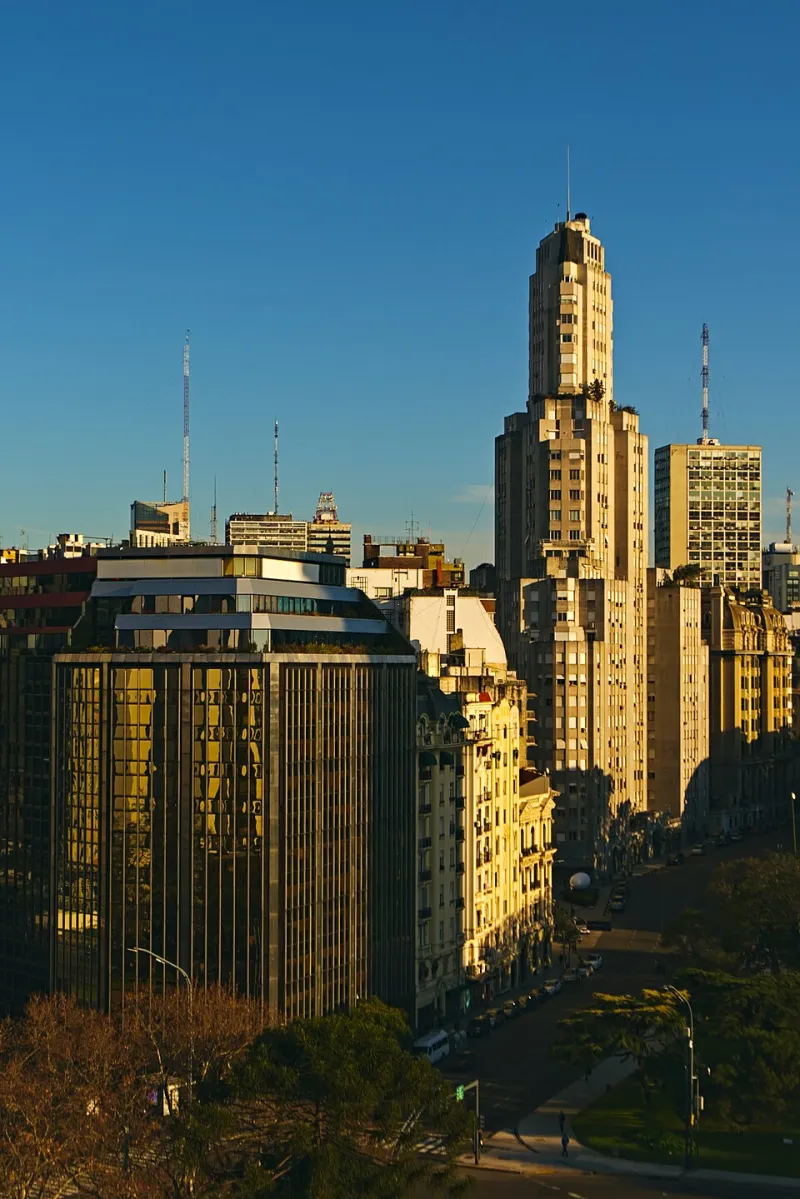
Photo: Gusbatero, CC BY-SA 4.0, via Wikimedia Commons
Every real estate market has a script it follows when density arrives, whether the city admits it or not. Argentina has been running that script longer and with less fanfare than almost anywhere in the Americas, and the results are instructive for US investors watching zoning reform debates unfold in Minneapolis, Portland, and Sacramento.
The core lesson from a decade of Argentine triplex conversions is this: the physical change comes first, the legal change comes later, and the investors who profit are the ones who understand which neighborhoods are already behaving like their future selves.
The Argentine Sequence, Step by Step
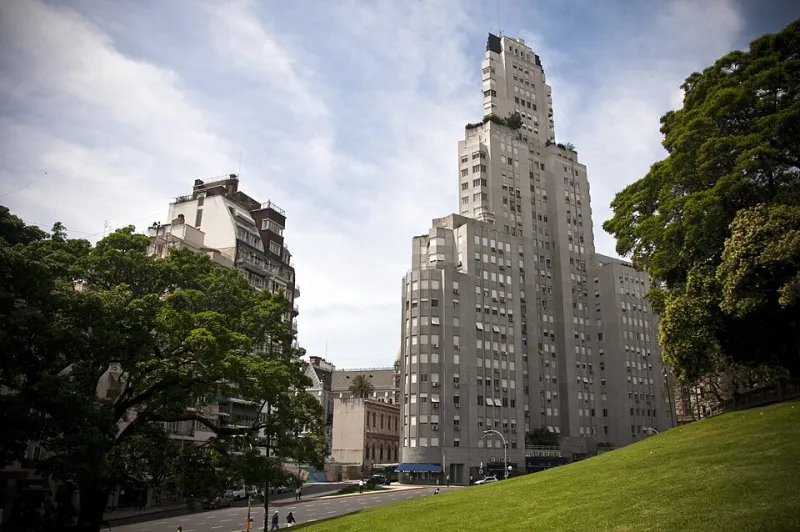
Walk the residential barrios of Buenos Aires — Caballito, Almagro, portions of Villa Urquiza — and you'll notice something peculiar on nearly every block. A stately pre-war casa sits between two modest three-story buildings, each housing three families where one once lived. The pattern repeats with such regularity that it reads like a growth ring in a tree.
The sequence typically unfolded like this. First, an aging single-family home on a narrow lot became economically burdensome for an elderly owner. Second, a buyer — often a small local developer or an extended family pooled together — acquired the property at a price reflecting its single-family use. Third, incremental conversion began: a ground-floor unit, a second floor added, eventually a third. Fourth, the municipal paperwork followed years behind the construction, a phenomenon Argentines refer to, only half-jokingly, as "regularización."
The economics worked because the lot was already deep enough, the street was already served by transit, and the neighborhood already had the commercial spine — the panadería, the verdulería — that three households per lot require. Nothing about the conversion demanded new infrastructure. It demanded only the willingness to add doors.
Why the US Version Runs in Reverse
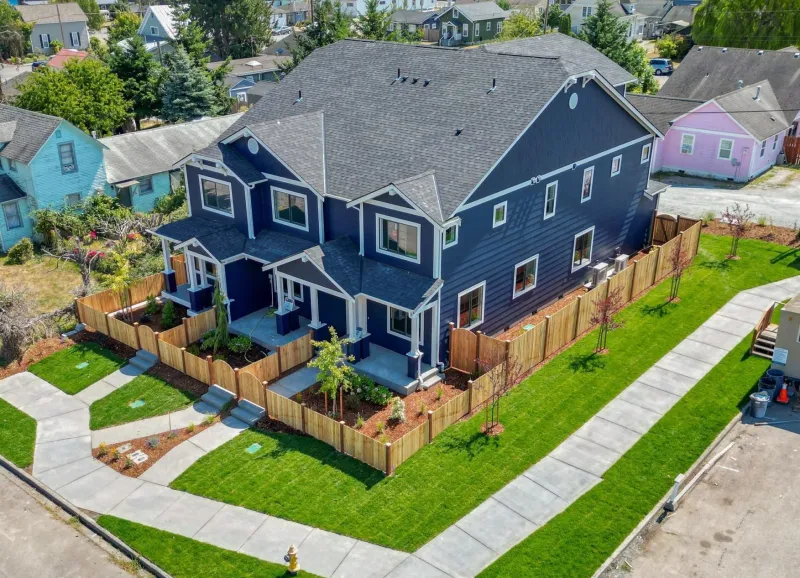
American cities are attempting the same transformation, but the order of operations is reversed: the legal change arrives first, and the physical change follows. Minneapolis ended single-family-only zoning in 2018. Portland expanded middle housing in 2019. California's SB 9, effective 2022, allows lot splits and duplex development on parcels zoned for one home.
This reversal matters enormously for investors, because it creates a lag — sometimes three to seven years — between when upzoning is signed into law and when conversions actually appear on the ground. During that lag, most market participants either don't believe the change is real or can't underwrite it. Financing remains conservative. Appraisers lack comparables. Neighbors litigate.
The Argentine experience suggests what happens when the lag closes: values on converted parcels re-rate sharply, and the premium accrues to whoever held through the uncertainty. In Buenos Aires barrios that densified, the gap between a converted triplex parcel and an unconverted neighbor of identical dimensions regularly reached 40 to 60 percent once the pattern was established on a block.
A Five-Point Screen for Pre-Upzoning Neighborhoods
Borrowing from the Argentine playbook, US investors can screen candidate neighborhoods with a short checklist:
-
Lot geometry. Argentine conversions flourished on lots of roughly 8 to 10 meters of frontage with substantial depth — dimensions that map closely to 25- to 33-foot-wide US lots in older grid-iron neighborhoods. Wide-frontage suburban parcels convert poorly; narrow, deep urban lots convert well.
-
Transit that already works. No Argentine triplex neighborhood required a new subway line. The Subte or the colectivo was already there. In US terms, look for existing bus frequency or rail access within a quarter mile — infrastructure that supports three households per parcel today.
-
A commercial spine within walking distance. Three-unit buildings need three sets of errands. Neighborhoods with intact corner retail, even tired retail, mirror the Argentine precondition.
-
An aging single-family stock with deferred maintenance. The conversion trade begins with a motivated seller. Neighborhoods where the original housing stock is 60-plus years old and visibly tired are where the first transactions will occur.
-
Zoning momentum, not zoning certainty. Argentine conversion zones were never master-planned; they accreted. The US equivalent is a city that has adopted a middle housing study, commissioned a form-based code draft, or appears on a state mandate list. The signal is motion, not completion.
Where the Screen Points Today
Applying the framework, several US market types stand out. Inner-ring neighborhoods of the Midwest — parts of St. Paul, Columbus's pre-1950 districts, Kansas City's older cores — combine narrow lots, transit, and state legislatures actively debating density mandates. In California, SB 9's lot-split provisions make older parcels in the San Fernando Valley, Sacramento's midtown fringe, and San Diego's college-area neighborhoods the closest structural analogs to the Buenos Aires conversion lots: deep, narrow, and already served.
The cautionary note from Argentina is equally valuable. Conversion value concentrates on the parcels that convert, not the neighborhood as a whole. The casa between two triplexes was worth less than its neighbors for years. Selecting the parcel — corner-adjacent, deep, with side access for a second entrance — matters more than selecting the zip code.
The Long View
Argentine cities never passed a grand upzoning law. Density arrived parcel by parcel, family by family, over decades. The US is attempting to legislate in one decade what Buenos Aires did in four, which means the American version will be lumpier, more litigated, and — for investors who read the sequence correctly — more rewarding during the transition. The blueprint exists. It's written in three-story increments on narrow lots, and it's coming to a block near you.