Signed, Sealed, Undelivered: The Package-Zone Audit Every Triplex Buyer Should Run
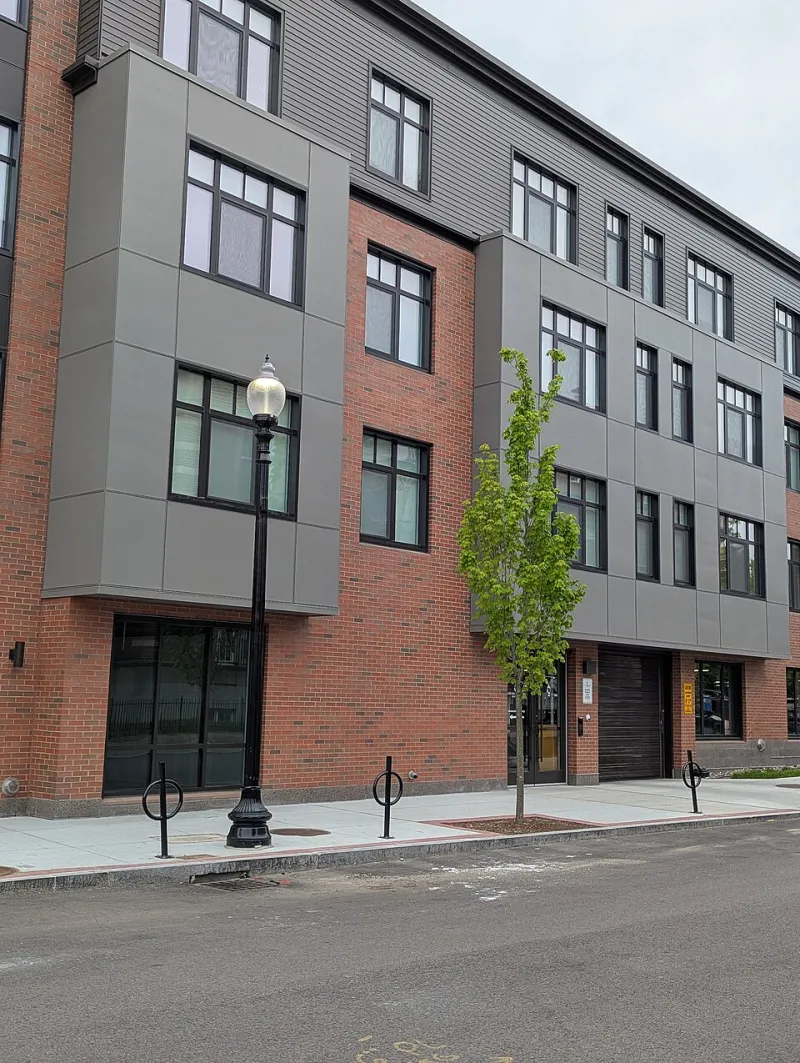
Photo: IlPinguinoOSM, CC BY-SA 4.0, via Wikimedia Commons
Most triplex underwriting treats the front entry as one line on an inspection report: door, lock, light, done. In practice, that entry is a small logistics terminal. Three households, each receiving two to four parcels a week, push somewhere between 300 and 600 packages a year through a space designed decades ago for a welcome mat. When the terminal fails, the cost never appears as a repair invoice. It appears as a tenant who cannot receive a time-sensitive envelope, a slip on the stairs where boxes were stacked, and a renewal conversation that ends politely but negatively.
The Quiet Cost of a Pile of Cardboard
Porch theft is the visible symptom. The subtler problem is the daily friction of a shared entry doing work it was never configured to do. In a three-unit building, the ground-floor tenant becomes the unpaid package concierge by default. Neighbors text each other about boxes sitting in the vestibule. Carriers begin leaving items in places they should not, because no one has told them where the drop point is. During the holiday quarter, the pile turns into a trip hazard in a hallway that also serves as the fire exit.
On the insurance side, the landlord policy typically covers the building, not the tenants' belongings. A stolen laptop or a missing pair of running shoes is generally a renters insurance matter, and many tenants do not carry it. When losses recur, the landlord absorbs them indirectly, through requests for reimbursement, damaged goodwill, or the decision not to renew.
A Fourteen-Day Delivery Audit Before You Close
The goal is not a forensic study. It is a directional number that tells you whether the entry needs intervention and how much of it. Two weeks is enough to see the pattern, provided you count consistently.
Ask the seller for carrier records if they exist, then supplement with three scheduled observations per day: mid-morning, early afternoon, and evening. Record the following for each unit and each day.
- Total packages received, split by carrier (USPS, UPS, FedEx, Amazon, grocery or meal services).
- Deliveries that required a signature and failed on the first attempt.
- Items left unattended in the entry or on the stoop, and for how long.
- Theft or suspected theft incidents, including partial removals.
- Carrier notices taped to the door and how long they stayed.
- Whether the package landed in one household's zone and had to be moved.
A useful summary metric is the unattended-hours ratio: the total number of parcel-hours sitting in the common entry divided by the number of packages. A triplex where that number stays under two hours is functioning. A triplex where it runs past eight hours is telling you the entry is being used as a warehouse, and that the lease, the layout, or both need adjusting.
What a Buenos Aires Vestibule Teaches an American Triplex
In older Argentine residential buildings, the street door is a deliberate threshold. A heavy reja, a buzzer panel, a narrow hall, and a clear line between public sidewalk and private stair. In buildings without a portero, the neighborhood kiosco often serves as the informal receiving point, and residents know which nearby shop will hold a parcel until six o'clock. The design assumption is not that a package will wait on a shelf. It is that the package will be handed to someone.
The transferable lesson is role separation. A vestibule should have a place to wait, a place to be received, and a place to be stored, and those three should not be the same square footage. American triplexes rarely have a doorman, but they almost always have four to six feet of common hallway that could be repurposed rather than rebuilt.
Three Tiers of Package Zone, Priced for a Triplex
Not every building needs a locker bank. Match the intervention to the audit number.
Tier one, under $400. A lockable parcel drop box bolted near the door, a doorbell camera aimed at the stoop, a motion light, and a small sign that names the building and the drop instructions. This solves the majority of unattended-hours problems in low-volume buildings.
Tier two, roughly $1,200 to $2,500. A wall-mounted multi-compartment locker with a keypad, a canopy over the stoop, and an intercom or smart-buzzer upgrade so carriers can reach a specific unit without entering the common hall. This tier is appropriate when the audit shows more than forty packages a month or repeated signature failures.
Tier three, $5,000 and up. A vestibule reconfiguration: a locked grille or half-door separating the entry from the stair, a shallow package closet, and lighting tied to the camera. This is the Argentine reja approach applied at small scale, and it is worth the spend only when the building has a persistent volume problem and the layout allows the separation without narrowing the fire path.
Lease Language That Assigns Risk Without Being Adversarial
A package zone fails when the lease is silent. Three short provisions cover most of the exposure.
- Carriers are not authorized to enter the building beyond the designated delivery point, and tenants should not prop the street door for them.
- Packages left in the common entry are left at the receiving tenant's risk, and tenants should retrieve them within a reasonable window, stated as twelve hours in the house rules.
- The owner provides a locking parcel box as a convenience and does not assume custody of tenant property; tenants are strongly encouraged to carry renters insurance.
Keep the language in the house rules rather than the main lease body where possible. It reads as operational rather than punitive, and it is easier to update when the carrier mix changes.
Folding It Into the Numbers
A single avoided turnover is worth more than the entire tier-one package zone. If a secure drop point moves renewal probability by even a few points across three units, the payback lands inside the first year. Treat the audit as a capital planning input, not a courtesy.
Before you write the offer, stand in the entry at four in the afternoon and count what is sitting there. The answer tells you something the rent roll cannot.