Ground-Floor Economics: Why the Retail Beneath Your Triplex Decides Its Rent Roll
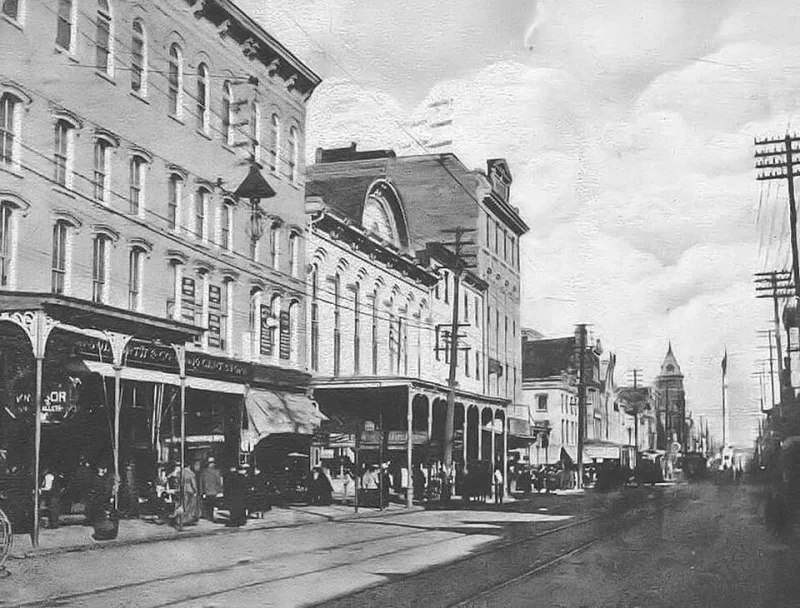
Photo: Anonymous Postcard Photographer, Public domain, via Wikimedia Commons
Walk any residential block in Buenos Aires and you will notice something American zoning maps forgot: apartments stacked above bakeries, vegetable stands, hardware shops, and cafés that have poured the same cortado for thirty years. The tenants upstairs are not paying a premium despite the commerce below them. They are paying a premium because of it.
For the American triplex investor, this observation is more than trivia. It is an underwriting variable that rarely appears in a pro forma but shows up faithfully in the rent roll.
The Amenity You Cannot Renovate
You can upgrade a kitchen. You cannot upgrade a neighborhood's street life. Yet that is precisely what many tenants are renting when they choose a triplex over a garden apartment complex two miles away.
A functioning ground-floor commercial corridor shortens the walk to daily needs, creates passive safety through foot traffic and evening activity, and signals that the block is watched over by people with a stake in it. Jane Jacobs called this "eyes on the street" decades ago, and her observation was built on the same mixed-use fabric you still see across Buenos Aires' barrios — Palermo, Almagro, Caballito — where three- and four-story walkways rise above thriving storefronts.
In practical terms, a triplex within a five-minute walk of a healthy café, a grocery option, and a pharmacy commands measurably stronger retention than an identical building on a block of unbroken residential frontage. Tenants renew. Vacancy gaps shrink. And when it comes time to raise rents, you are asking for an increase the neighborhood itself is justifying.
Reading the Storefront, Not the Brochure
The trouble, of course, is that commercial vitality is easy to claim and hard to quantify. Listing agents will tell you the area is "up and coming." The useful question is what the ground floor is actually doing at 2 p.m. on a Tuesday.
Buenos Aires investors learn to read storefronts the way American investors read cap rates. A block with an active café, a fruit or vegetable stand, and a small market is a block with a functioning economic heartbeat. A block lined with vacant glass, dollar stores, and payday lenders is telling you something too — often that the demand is thinning from the ground up, and the residential units above it will follow.
A Field Checklist for the Street-Level Audit
Before you write an offer on any triplex, spend ninety minutes on the sidewalk within a quarter-mile radius and score what you find.
1. Count the open storefronts. Walk both sides of the nearest commercial street. If fewer than one in ten ground-floor spaces sits vacant, the corridor is healthy. Three or more consecutive vacancies is a red flag no rent comp will undo.
2. Check the anchor tenant's hours. A café or market open past 6 p.m. signals real local demand. A strip of businesses shuttered by mid-afternoon suggests the traffic is thin and daytime-only.
3. Look for longevity, not just novelty. A hand-painted sign, worn door handles, a regular's coffee order remembered — these belong to businesses that have survived. Longevity means the neighborhood's economics support commerce, not just subsidy and optimism.
4. Notice who is on the sidewalk. Mixed ages, people carrying groceries, strollers, dog walkers at different hours. A corridor used by residents is far more durable than one sustained by a single employer or a weekend crowd.
5. Check for the "third place" test. Is there at least one spot where a tenant of your building could sit down with a laptop or a friend without driving? In Buenos Aires, this is the café on the corner. In American terms, it might be the same thing, a bakery, or a taquería. Its presence correlates strongly with the tenant who stays four years instead of one.
6. Watch the edges of the corridor. Where does the commercial strip begin and end? A corridor that stops abruptly often marks a zoning boundary — which is also where you will find the next wave of conversion and appreciation when the boundary moves.
Translating the Audit Into Underwriting
Suppose your street-level audit comes back strong. What does that actually do to the spreadsheet?
First, it compresses your vacancy assumptions. A triplex in a walkable, commercially active pocket can reasonably underwrite to a lower annual vacancy rate than the market average, because the amenity base does the marketing for you.
Second, it shifts your rent-growth thesis from speculative to structural. You are not betting on a neighborhood "tipping." You are betting on demand that already exists and renews itself daily at the corner café.
Third, it protects your downside. In a soft market, the tenant comparing your unit to a cheaper option elsewhere will weigh what is outside the front door. Ground-floor vitality is the amenity that does not show up in square footage but does show up in the renewal decision.
The Buenos Aires Lesson, Applied
Argentina's residential blocks never separated the corner store from the apartments above it, and the result is a rental culture where location premiums are anchored in daily convenience rather than school-district boundaries alone. American investors do not need to import the zoning regime to import the insight: when you evaluate a triplex, evaluate the block the way a tenant will live on it.
Stand on the sidewalk. Count the open doors. Watch who buys coffee at nine and groceries at six. The rent roll you will own in five years is being written on that street corner today.