The Corner Store Oracle: Building a Tenant-Screening Network That Credit Reports Can't Match
Every triplex owner eventually learns the same hard lesson: the credit report tells you what a tenant had, not what a tenant will do. The 720 score applicant who goes dark in month three. The spotless application from the tenant who has quietly feuded with every neighbor on the block.
In Buenos Aires, where multi-family living is woven into the urban fabric rather than an investment niche, landlords long ago stopped relying on paper alone. They rely on the portero — the building doorman — and on the constellation of shopkeepers, taxi drivers, and neighbors who notice everything. This informal intelligence network predicts payment behavior with a accuracy no FICO score can match, and the good news is that the system ports, with some adaptation, to any American neighborhood.
What the Portero Actually Knows
A portero in a traditional Buenos Aires conventillo district or a mid-rise in Almagro sees who comes home late, who argues in the lobby, who receives packages from collection agencies, who hasn't been seen in weeks. When a prospective tenant's references are called, a good portero provides the only reference that matters: not "did they pay," but "how did they live?"
The insight is structural, not sentimental. Payment behavior is a social behavior. People pay rent to landlords they see, in buildings where they're known, in neighborhoods where they have standing. Isolation — the tenant nobody in the building can describe — is the single strongest predictor of a problem tenancy.
The American Translation: Your Five-Node Network
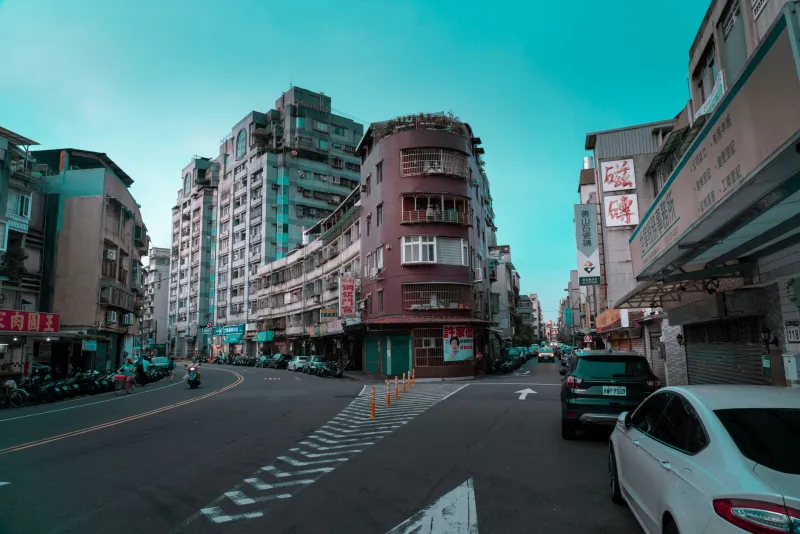
You don't have a portero. But a triplex is a small building on a specific street, and streets generate observers. Before you hand over the keys, map these five nodes:
- The corner retailer. The owner of the bodega, corner store, or café nearest your property sees foot traffic daily. They know which addresses have turnover, which have police visits, which tenants are fixtures.
- The mail carrier or delivery drivers. Nobody knows occupancy patterns better. USPS carriers won't discuss individuals, but a friendly conversation about "the building at 1420" often surfaces volume-level truths: frequent move-outs, packages piling up, units that sit empty.
- Adjacent property owners. The owner of the duplex next door shares your tenant pool, your block's reputation, and often your problem tenants. Introduce yourself the day you close.
- The previous landlord — asked differently. Everyone asks "did they pay on time?" Ask instead: "Would you rent to them again at the same rent?" Silence is an answer. So is a pause.
- The current neighbors at the applicant's present address. Knock on the door beside their unit. "I'm screening a tenant who's applying at my building — anything I should know about life next door to them?" This is the closest thing to a portero interview available in the US market.
Fair housing law constrains what you may act on, and it should. This network is not a tool for discriminating against protected classes; it is a tool for verifying behavioral facts — noise, disputes, property neglect, occupancy misrepresentation — that applications conceal. Document what you learn, apply your criteria uniformly, and never let a single anonymous comment decide a lease.
The Question Checklist That Predicts Payment
When you work your network, skip the yes/no questions. Ask these instead:
- "How long have they lived there, and have you ever seen them interact with the neighbors?"
- "Do they receive a lot of deliveries, or a lot of notices?"
- "Have you ever seen them with family or visitors, or are they rarely around?"
- "When something breaks or goes wrong on the block, how do they respond?"
- "If they moved out tomorrow, would anything change on this street?"
The pattern you're listening for is rootedness. A tenant with a routine, a relationship with the corner store, and a visible presence is a tenant with something to lose — and people with something to lose pay rent.
Underwriting Happens Outside the Spreadsheet
Your pro forma models the debt service, the vacancy allowance, the maintenance reserve. It cannot model whether Unit B's applicant has burned through three friendships on the current block. That data lives on the sidewalk, and it's free for the owner who walks the block before signing the lease.
Spend one afternoon on it. Buy a coffee at the corner store, introduce yourself to the neighbor next door, and make one unhurried call to the prior landlord. Twelve minutes of conversation will tell you more about the next twelve months of rent than any scoring model — and it's the closest an American triplex owner will ever come to having a portero at the door.